Be yourself; Everyone else is already taken.
— Oscar Wilde.
This is the first post on my new blog. I’m just getting this new blog going, so stay tuned for more. Subscribe below to get notified when I post new updates.
Be yourself; Everyone else is already taken.
— Oscar Wilde.
This is the first post on my new blog. I’m just getting this new blog going, so stay tuned for more. Subscribe below to get notified when I post new updates.

Mike De Leon uses films as a medium to communicate political perspectives to his audiences. Although the mood of his films vary greatly, Mike De Leon’s experimentation helps to tell a series of stories rich with political context. The variety of genres and themes he has worked on can be considered as a testament to his ability as a director, being able to forge unique stories injected with his unique creative vision.
“Kakabakaba Ka Ba?” is one of Mike De Leon’s more experimental films, exploring the premise of the massive underground industry running the economy of the Philippines. The story is told through the perspective of a cast of four characters, Johnny, Melanie, Nonong, and Nancy who unknowingly get themselves involved in a strange conspiracy involving a cassette tape. The premise of the whole film seems to be incredibly random and fantastical, but still manages to get its message across. Although the film is comedic in nature, it tackles ideas of powerful underground syndicates running the country. The misadventures of our four characters leads them to confront these syndicates, one of which having connections with the Catholic Church. Mike De Leon creates such a ridiculous setting for “Kakabakaba ka ba?” that it’s honestly hard to take seriously. By paying close enough attention, however, we can begin to grasp how dire the situation is in the story. Something as powerful as the Catholic Church being involved in underground activities brings concern to Johnny and his friends. Nearing the end of the story, the film verses both the Chinese and Japanese factions in a music-filled battle with the main characters getting caught in between their dispute. The musical number performed during this part seems to be a satire of the Philippine economy, being run by 3rd party factions and manipulated from the underground where Japan’s economy can proliferate.
Mike De Leon has the skill to build on these large ideas and mask them as something else entirely, requiring the careful attention and insights of his audience in order to full grasp the real idea behind his films. “Kakabakaba Ka Ba?” takes a generally terrifying concept and presents it as a comedic musical. Mike De Leon is able to command the mood of his film to mislead the viewer in perceiving the film at face-value. He is able to hide so many ideas behind this technique that it allowed him to express such strong political opinions in his films during the Martial Law period. A film where we can fully appreciate Mike De Leon’s craft is Batch ’81, a fraternity film which directly references the abuses committed during Marcos Regime.
Batch ’81 follows the journey of Sid Lucero as he becomes an initiate at his university’s most influential fraternity, Alpha Kappa Omega (AKO). Mike de Leon utilizes the fraternity premise as way to reference the Martial Law period. Throughout the film, the main cast of characters are constantly subjected to tests intended to test their faith in the fraternity. Each hazing they received individually tore down each character, damaging their pride and made them question their decision to become initiates. Eventually Sid Lucero comes into conflict with his group when two of them decide to back out of initiation, hearing of this, the masters have Ronnie Roxas strapped to an electric chair where the rest of the group is tasked with electrocuting him for every wrong answer. One of the questions Ronnie was asked to answer involved Martial Law, and if it was beneficial to the progress of the Philippines. At this point, Ronnie who was presumably dead was unable to answer the question, referencing to how the people’s voices were silenced during the Marcos Regime.
Batch ’81 demonstrates the vicious cycle of abuse, as we come to the realization that similar events may transpire for the next batch of applicants. Sid Lucero saw the fraternity as his crutch for success, thinking that the ends had justified the means. In reality, Sid progressed to become more callous and shameless towards his friends and himself. He endured the countless events of humiliation from his superior, putting in all his faith because he believed that it would be worth it in the end. Sid’s aggressive character was able to drag his friends into his own ambition, forcing them to endure the abuses that they would have otherwise escaped. Batch ’81 manages to manifest a frighteningly accurate atmosphere of how it would feel like in a world stripped of human rights, being ruled by “masters” capable of taking away the joy of expression and punishing those who stray too far from their word.
Mike De Leon successfully gets his message across with Batch ’81, once again packaging his political perspectives into a film. Batch ’81 not only functions as a political whistle-blower, but is also able to stand alone as a brilliant drama depicting the darkness within human nature. His creative vision allowed him to completely take command of his projects, crafting visceral scenes of violence using up close camera-work and masterful control of lighting, setting the grim scene of the dimly lit electric chair and emphasizing the brutality of the brawl between the fraternities. Mike De Leon formulate his own style of political storytelling through engaging audiences with believable, realistic stories.

Lino Brocka’s films usually depict the hardships of lower-class society, “Maynila sa Mga Kuko ng Liwanag” and “Insiang” bring to life attributes of financial struggle to complement Lino Brocka’s artistic direction. The characters in both his films have faced with a common pattern of being imprisoned. Imprisoned in the sense that their situations seem inescapable given their circumstances. Insiang was abandoned by her boyfriend and left to endure her toxic household, taking matters to the extreme because she was left with no other option. In a similar sense, Julio is trapped in a situation where he is forced to sacrifice his integrity to get by in an urban environment, losing his only reason for staying in Manila, he sets himself towards taking revenge. Lino Brocka’s two films possess an identity that associates with revenge. In both stories, Insiang and Julio are lead to getting even with the society that’s wronged them, trapped by inescapable circumstances and forced to live and act at their lowest.
Lino Brocka, like many other film directors during Martial Law, integrates a handful of political metaphors in his projects. Insiang’s character relationships and plot developments tells a story of someone that desires to break free from their hopeless situation. Maynila sa Mga Kuko ng Liwanag also shines light on the desperations of surviving. Julio’s endeavors in earning his coin in Manila takes a toll on his character and we begin to see his personality grow more violent. Lino Brocka is able to map out his characters to succumb to their anger, with their end-result leading to someone’s death. His films are written as if it were created for nihilists. The pessimisic nature of Lino Brocka’s projects give us a small taste of what it must have been like living in such desperate times. The effect of Martial Law on Lino Brocka’s creative process really shines through in his films. Situations given to the characters really make think to myself that “it must be miserable to live like that” which makes sense because it really must have been depressing to live in Lino Brocka’s time where it was hopeless to vocally express yourself.
Lino Brocka wears the mind of a pessimist as a filmmaker, I can feel the anger and frustration of his characters in face of the hopelessness before them. His stories are so easy to empathize with because these struggles are very much real. Though the stories may be a work of fiction, Lino Brocka is able to capture these moments of strife in reality and project them so strongly onto the screen that it feels as if we ourselves are facing the same struggle. His ability to take his own personal pains and share with the audience is a strong characteristic of his films that allows us to delve deeper and investing ourselves into the conflicts of his characters. Julio and Insiang are faced with very real issues, that itself is uncomfortable to witness, watching someone being exploited and desperately trying to live is enough to make me flinch away from a whole scene.
Maynila sa Kuko ng Liwanag follows a tragic story where the ideals of hope are quickly snuffed out. Lino Brocka delivers the film in a very straightforward manner as it follows Julio’s desperate attempts at survival in the big city. The film utilizes a lot of zoom shoots and panning motions to zone in onto a characters’ facial expression. The whole film is viewed from Julio’s perspective which makes his struggles much more unsettling to watch. As the film progresses Julio becomes much more impatient and violent. When he finds out that his romantic interest, Ligaya, was brought to Manila for prostitution, he agrees that they should escape and return back to the province. Though soon after it is revealed that Ligaya had died during a struggle with Ah-tek. It is then that Julio finally snaps, murdering Ah-tek after tracking him down. The scene of Julio stabbing Ah-tek brought emphasis to the violence that was occuring, zooming in on every strike from his ice pick followed by Ah-tek’s face screaming in pain and terror. The final scene shows Julio cornered by a mob who had witnessed the murder, the camera zooms into Julio’s face this time right as the mob was about to attack him. As mentioned before the use of camera-work in emphasizing the strength of a scene is a characteristic of Lino Brocka’s films. It may be that Brocka wanted the key elements of a scene to have more impact, especially during the death of Ah-tek where the aftermath of the attack had a shot which zoomed in on his lifeless, blood-covered face.
In the case of Insiang, this film utilizes similar techniques in telling its story. Insiang also tells an unsettling story that folllows a young woman’s experience of falling victim to sexual assault and exploitation. Insiang is a much more emotionally based film compared to ‘Maynila sa Kuko ng Liwanag.’ The moments of genuine emotional pain are heartwrenching and downright frustrating to watch. The audience is presented such a miserable situation that we can’t help but sit by and watch Insiang’s character unravel. The latter part of the film carries out the revenge plot typical of Brocka’s stories, but does it in a much slower pace. When the time for Dado’s end came, I couldn’t help but feel satisfied with the outcome. Lino Brocka was able to make Insiang an emotional rollercoaster that invested its audience into the character’s strifes and eventual retribution. Dado’s death was executed similarly to Ah-tek. Every strike of the blade was emphasized as we can see his face contort in pain, all the while Tonya screamed profanities at the dying man.
Brocka’s films are often at times dark and end with mixed-feelings that leave the audience either cheering or rearing back in disgust after witnessing the bloody end of the antagonist. These films are simply meant to carry out a message that represents the strife encountered by the people of Lino Brocka’s time. His films bring to light the stains of Philippine society, unafraid to expose the atrocities that were committed during his time. Brocka’s creative vision was able to bridge together the fictitious elements of film with the reality of the world he lived in, creating a medium that could tell the story of his time to countless generations.
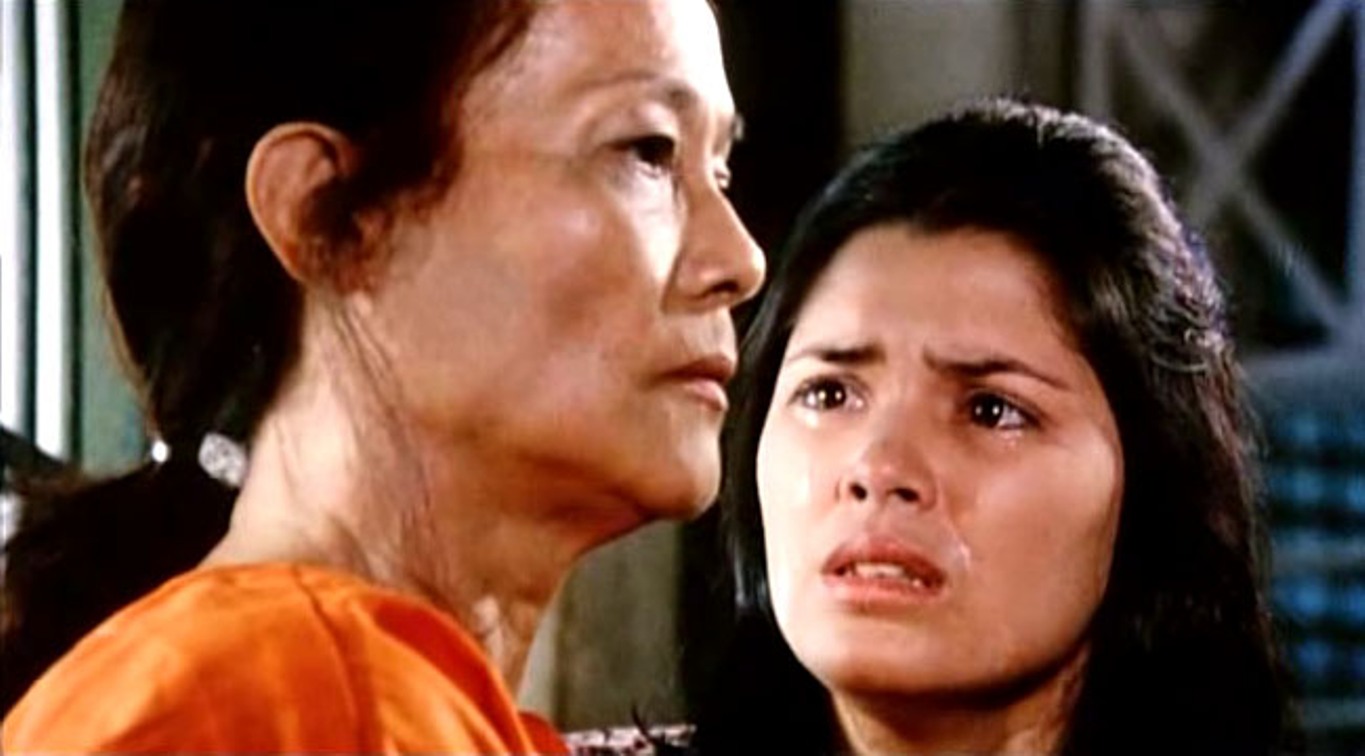
The film is directed by Lino Brocka, depicting the harrassment and exploitation of Insiang, a young girl living in Tondo. The film begins at a slow pace, introducing its main cast of characters. Insiang, who lives with her mother Tonya, and Dado, a butcher who moves into their residence as Tonya’s romantic partner. Initially Insiang and Tonya had been living with their relatives, though after an incident followed by a heated arguement, Tonya evicts them and from there on Dado enters the picture.
Tonya is shown to be a strict, borderline abusive woman. She developed her toxic personailty after her ex-husband had found another, leading her to be more controlling of her daughter and prohibitting her from seeing men. Insiang, however, is already seeing Bebot. One night, Bebot sneaks into Insiang’s room, however the two are seen by Dado who tells Tonya of what happened the following day. Later on in the film, Dado knocks out Insiang and takes advantage of her body. Of course, Tonya doesn’t believe Insiang when she tells her about what happened, even calling her daughter a liar and punishing her further.
Bebot seems to be the only solace for Insiang at this point, although it is revealed that Bebot only wanted to have sex with her, leaving without her notice. Insiang returns home to Tonya and Dado, and then she cooks up a plan to take revenge on the people that exploited her, using Dado as her instrument for putting everything into action. Insiang convinces Dado into starting a romantic relationship, allowing him to sneak over to her bedside at night. She manages to use Dado to attack her ex-boyfriend, Bebot and knots him deeper into a web of deception. Unaware of Insiang’s plans, Tonya becomes jealous of her relationship with Dado and confronts Insiang. The two get into an arguement with the odds being against Tonya when the proof is presented to her. In a rage, Tonya stabs Dado in the back essentially completing Insiang’s retribution plot.
Lino Brocka, like many other film directors during Martial Law, integrates a handful of political metaphors in his projects. Insiang’s character relationships and plot developments tells a story that goes beyond what is presented to us. At face-value the film is one that idealizes Insiang’s quest for retribution, delving deeper into the film’s symbolism we begin to understand the context of the story even more. The opening scene shows pigs being slaughtered, which is Dado’s occupation and place of work. Ironically by the end of the film, he himself gets butched by Tonya for lying and taking advantage of her and Insiang. Dado is depicted as a pig in the story, showing no shame in his actions and unable to control himself. The men in the film represent the overpowering dimension of society, taking advantage of those unable to defend themselves and using others for their own gain. Insiang was merely a victim of circumstances, having to live under the roof of an emotionally wounded mother who lost her sense of reason. At the end of the film Insiang visits her mother in prison where they seemingly reconcile, explaining that she really does love her mother. Tonya, looks back at Insiang walking away, regretting how she neglected her daughter when she was put through all the abuse.
Insiang is a film that shows no fear in getting its message across. Reflecting the country’s history during its time in Martial Law, Insiang can be viewed as the revolutionary movement while Tonya and Dado canbe seen as the domineering forces that ruled over the country during Martial Law. The parallels between the film and Philippine history can be vaguely seen, where Insiang wants to simply live free from exploitation and living as her own person. Insiang can also be viewed as a form of representing the strengths of women as they are also people who deserve to stand equally with everyone else. The film has so much context in society drawn from the symbolisms located all throughout its runtime. Insiang is able to deliver an impactful retribution story and more importantly acts as a medium of vocalizing societal ills.

Batch ’81 is the dramatic depiction of a college fraternity known in the film as Alpha Kappa Omega (AKO). Early on in the film the main cast of characters are subjected to tests given to them by their fraternity masters. These tests were designed with the intention to break down their pride and humiliate them, failing to comply or perform in the tasks given to them will result in their punishment. Throughout the film each of the neophytes are pushed to their limit, experiencing physical and emotional abuses from the fraternity masters. Sid Lucera, the most ambitious of the group, is dead set on becoming a master of AKO. Time and time again Sid and his companions are put to the test until they start deciding to back out of their initiation process. When Sid learns of this, he becomes outraged and confronts the two people who decided on leaving. Sometime after the group is pushed further when Ronnie becomes tied to an electric chair as part of the test, with Sid being eager to prove his trust to his masters by “shocking” Ronnie longer than his other companions.
Later on in the film the group eventually settle their differences and decide to pull through with the initation process, the neophytes are then tasked to act out their own rendition of the Cabaret play. The scene itself is an indirect manner of voicing out political and societal issues. The original Cabaret play was meant to parody the grim side of political events, including satirical versions of the Nazi faction and the KKK. Batch ’81 functions similarly as it seeks to voice out the country’s own issues. With the Philippines being under Martial Law, Mike De Leon used this scene to cleverly provide more emphasis to his film’s true purpose. In my opinion Batch ’81 acts as a whistle-blower in the sense that Mike De Leon was able to capture and reflect the Philippines’ status quo during Martial Law. The cast featured in Batch ’81 were stripped of their rights to express themselves, their masters had essentially stripped them away of free will, similar to the events that transpired during Martial Law. Mike De Leon’s Batch ’81 operates under the guise of a college drama, but its underlying themes hit close to home for the Filipino People.
As we draw closer to the film’s conclusion, tragedy begins as the death of their friend Arni begins to take hold of the group towards a mission of vengeance. AKO decides to settle their dispute with their rival fraternity Sigma Omicron Sigma in a brawl. Things eventually take a turn for the worst when the opposing group brings out weapons with the intention to do more than just beat AKO. The battle between the two group doesn’t end without its losses, Ronnie loses his life during the struggle after being struck by a knife. Sid was eventually able to kill Abet, but not without losing a close friend. By the end of the film the remaining members of the group are officially accepted into Alpha Kappa Omega. It is revealed in the last few scenes that Sid Lucero was able to reach his goal and become a master of AKO, setting up the hazing process for the next batch of neophytes.
Batch ’81 demonstrates the vicious cycle of abuse, as we come to the realization that similar events may transpire for the next batch of applicants. Sid Lucero saw the fraternity as his crutch for success, thinking that the ends had justified the means. In reality, Sid progressed to become more callous and shameless towards his friends and himself. He endured the countless events of humiliation from his superior, putting in all his faith because he believed that it would be worth it in the end. Sid’s aggressive character was able to drag his friends into his own ambition, forcing them to endure the abuses that they would have otherwise escaped. Batch ’81 manages to manifest a frighteningly accurate atmosphere of how it would feel like in a world stripped of human rights, being ruled by “masters” capable of taking away the joy of expression and punishing those who stray too far from their word.

The arrival of PPP 2019 brought with it a wonderful roster of films able to hold a torch to the legacy of culturally rich films in Philippine Cinema. The week-long event featured ten different films completely unique from one another, three of which I was able to watch a week after following the initial showing.
LSS is a musical romance film managing to land a spot in the PPP 2019 roster. Contrary to the bitter and strife filled romance commonly depicted in Philippine Media, Last Song Syndrome better known as LSS provides more of the brighter aspects of love. LSS follows the blooming romance between two emotionally wounded characters, whom are brought together listening to their favorite indie band “Ben&Ben.”
This love story unravels all too conveniently, but not without the relationship’s occasional bumps and cracks. Although somewhat cliched and predictable, the film is far from being mediocre and still managed to provide audiences a pleasant experience.
LSS follows the story of Sarah (Gabbi Garcia) and Zack (Khalil Ramos) both struggling to satisfy their hearts. Zack, who is having trouble finding his romantic partner, and Sarah, who just can’t seem to make it big as a musician. Both these characters try to figure out their own problems alone, Sarah being concerned about carrying out her passion in becoming a professional musician and Zack who has his heart broken not too long ago. They have completely different problems but all of the sudden the two become acquainted with each other via their common interest in music, more specifically the up and coming local indie band, “Ben&Ben.”
In LSS, it comes as no surprise as to how the two characters are able to develop a unique connection through something as simple as music. The film is targetted towards a much younger demographic, hitting all the marks for millenials and generation-z audiences and satisfying the Filipino youth’s desires of falling in love with a fitting soundtrack to complement their romantic adventures. LSS aims to cater to the sweet tooth of its audiences and is able achieve that marvelously.
The dynamic between Sarah and Zack is portrayed beautifully by real-life couple Gabbi Garcia and Khalil Ramos. Despite all the cliches that LSS constantly pours out onto the screen, the romantic tropes are not an issue at all and don’t get in the way of the story. The relationship between the two feels far from being fabricated just for the film, in fact LSS does a good job of pacing the developing relationship between Sarah and Zack which makes the story of LSS to feel a lot more fulfilling.
Throughout the story Zack gives Sarah the support she really needed when no one else would, helping her take steps in producing her music and just simply being the one to help her remain steadfast in pursuing her career. Though Zack acts as Sarah’s helping hand through most of the film, we rarely get a grasp of Zack’s main conflicts whereas Sarah’s problems lay bare. It’s through Zack’s connection with Sarah where he comes to a realization of his own personal passion. The two develop a very realistic relationship which goes beyond the simple idea of romance. Sarah and Zack learn to value the importance of their own goals, deciding to choose their own paths to grow independently.
LSS did wonderfully to create a modern-day setting reflecting that of our own society. Integrating cultural and political representation such as the LGBT as well as the portrayal of a divided household. To put it simply, the film is able to draw parallels from the real world to relate to audiences familiar with modern-day happenings. Although just an insight, I would like to point something out. We, who live in such a globally connected world tethered together by things like internet often have a hard time being able to feel involved in other peoples’ lives. Ironically, access to worldwide communication can make us feel a lot lonelier than we ought to be. The world begins to be viewed as a place full of differences when we start viewing it from a bystander’s perspective. In LSS, it directly uses something like music as a medium of understanding and connection, essentially breaking the walls between everyone’s differences. The film does not really go beyond the themes of a typical RomCom, but still manages to deliver an exaggerated yet tasteful depiction of modern-day romance.
Aside from romance comedies, PPP 2019 brings a lot to the table. “Watch Me Kill” has a lot in store for those who crave a dramatic action story, complete with interesting character dynamics alongside some nail-biting moments that leave audiences on the edge of their seat.
Watch Me Kill and its ruthless main character, Luciana sets up the story of the film to be one filled with violence and death. Though early on we find out that Watch Me Kill has more to offer than just bloodshed. To give context, Luciana is a hired-gun, famous for her merciless ways and take-no-survivors mentality. At the beginning of the film it is shown she essentially has an entire hitlist of people, one of which being a person who, unbeknownst to Luciana, has a young girl captive. The young girl, Aurora ends up taken in by Luciana and from here on we begin to witness a shift in Luciana’s character. Luciana’s personality goes into turmoil when her maternal nature begins to show under the shell of her cold and violent behaviour.
Watch Me Kill plays a lot with the idea of death and uses Luciana to convey a message through her character. The fact is that Luciana had killed so many people throughout her career that she has become a hollow shell of herself, becoming numb to the idea of killing and eventually seeking the day where she herself can experience death. When Aurora entered Luciana’s life it’s as if she had a new reason to fear death. In time Luciana’s inner conflicts began to send her into turmoil and the duality between her killer and maternal personalities begin to become more visible.
Luciana seems to be a spin-off of the badass character trope. She possesses some characteristic similarities with hollywood action characters such as Robert McCall and John Wick, ruthless characters who seek freedom from being so closely acquainted with dealing death. The film tries to push Luciana’s character to mature into that of a mother-figure for Aurora, and it definitely shows throughout the film that she has found something to protect other than herself. After finishing the film, “Watch Me Kill” leaves me to think of how much the events of the film reminded me of the recent incidents that happened in the Philippines. I’m reminded of how our country has constantly danced with death in the recent years. Needless bloodshed and unavoidable violence has left fresh wounds on our country’s history, in the end we just want to be rid of it all. Similar to how Luciana wants to escape from her currrent situation, us Filipinos feel like we could also use a little break from war and death. “Watch Me Kill” can also be viewed from another perspective, and that’s when Luciana takes in Aurora and her character begins to go in a different direction. The value of kinship seems to be portrayed in Luciana’s character, often at times she is cold, but when push comes to shove her motherly nature begins to shine through. Friend or enemy, the relationship we have with other people are crucial to helping us mature to be reasonable people. Our family is where we get our headstart to develop affection for others, if you were to take that away, we end up becoming much colder towards other people. The reason for Luciana’s sudden change in character, is most likely her desire for a familial bond, something that was stripped away from her very early on in her life. Aurora was able to unhinge that desire within Luciana, essentially providing for her a bond between mother and “daughter.” Watch Me Kill was very straightforward with its story, being able to provide concrete circumstances for its characters and providing audiences with a sorrowful and touching character dynamic between Luciana and Aurora.
The third and final film I was able to watch takes the idea of death and flips it around. “Lola Igna” is a film that challenges our perception of living and dying, asking whether you would rather outlive everything you love than passing on early.
To briefly explain, Lola Igna is an elderly woman at the age of 118 years old. In the film, she currently holds the title of Oldest Grandmother in the country. Lola Igna’s “achievement” is known throughout the country and tourists come to see her on the regular. Lola Igna is not particularly fond of all the attention and doesn’t seem to want to do with anyone else. One day a man shows up at her front door who turns up to be her great-great-grandson, eager to get a good scoop out of his grandmother to post on his blog.
Although the film isn’t presented as a drama, the themes of Lola Igna are actually quite dark. The tragedy in film is not the fact that Lola Igna may be nearing her time to pass on, it’s the fact that those dear to her were the ones to pass on first. She sees no reason in continuing to live because she would rather be with her late relatives. There’s one scene in particular where she has a recollection of all the funerals she has ironically attended, sorrowing over the idea that she should have joined them long ago. It is all presented in a somewhat lighthearted manner that makes Lola Igna’s struggle easier to digest for audiences. So many moments are filled with comedic relief though thanks to the interactions between Lola Igna and her free-spirited grandson Tim, accompanied by the beautiful cinematography of Lola Igna’s residence takes a load off the chest of viewers. We are provided this welcoming atmosphere in the midst of a burdening existential crisis, and we can’t help but chuckle after one of the characters throws out a little gag line. Lola Igna is a film riddled with ironies, thankfully we get moments filled with genuine intimacy and understanding. It becomes a much more wholesome experience thoughout the journey as Lola Igna begins to find new meaning in living. Being able to view her longevity as an opportunity rather than burden.
In today’s society, it would be a gift to live longer. The world now seems so much larger than in previous eras and because of that there’s so much more to accomplish as a person. Time is our most important resource because it allows us to keep moving forward. Lola Igna is able to turn that idea around and present to us a life which has stagnated, waiting to pass on. This film is especially important to the younger demographic, proposing that there are more opportunities for us at our age. There is always a reason to keep living our lives and Lola Igna demonstrates that life does not just carry grievances, but also moments of joy and purpose.

I myself was born and raised in the city; living among those swimming in the sea of obscurity.
I was born and raised in an urban environment; accustomed to the hustle and bustle of city life. “Maynila sa Kuko ng Liwanag” a brilliant film directed by Lino Brocka, which depicts Maynila as a grim concrete jungle, rich with people desperate to feed themselves and an equal amount of cruelty to exploit their helplessness. For someone such as myself who grew up in the city, the film is quick to shed light on social issues and has done well to enlighten me on the possible dangers that lurk underneath the shadows of familiarity.
My favourite aspect of the film is the use of the main character, Julio Madiaga, a fisherman coming from the Marinduque- far from being familiar with the lifestyle of being in the city. Early on in the film he acquires a job as a construction worker, but due to not being used to manual labour, he collapses from exhaustion. In the scenes following his collapse, his co-worker hits Julio with a warning- that living in the city is difficult unless you have the means to afford a comfortable life. This warning, or rather advice about living in the city is from my perspective, quite accurate. The living conditions of being underpaid, indebted, or worse impoverished is absolutely abysmal here in the Philippines. During my time in senior high school, we were required to participate in community service, in the case of our class we were tasked to help construct housing for the less fortunate. While we were there I was able to talk with some of the residents of the area, and it turns out that quite a few of them work in construction themselves. From what I’ve gathered, they work roughly 12 hours a day only to earn about 50 pesos. Mind you these were 12 hours of manual labor in an extremely exhausting environment, starting from 6am to around 7pm. I’m not saying that I completely understand the circumstances of these people struggling with living in these harsh conditions, but the film, in my opinion accurately sheds light on the hardships of these people.
Later on in the film, it was revealed that the girl Julio had been searching for, Ligaya Paraiso was forced into prostitution and had even given birth. After hearing of this, Julio offers Ligaya a chance to escape with him. Although after Ligaya had not shown herself at the appointed location, she ends up disappearing. The following day Julio is informed that Ligaya died during a struggle. The following events that unfold are quite gruesome, and in my opinion is the highlight of the film where we visibly see Julio breakdown mentally and descend into unbridled anger, acting more like an animal than a person. I assume this is what the film is trying to depict because after being chased by a mob, they corner Julio like a wild beast and the scene zooms into his face as the mob ready their attack.
My take on the film’s symbolism is that the hardships and evil in the city can force one’s character to degrade and push them to do things that they normally wouldn’t, to the point of almost losing all sense of self-control and conscience. Although this might sound like an exaggeration we can see that throughout the film Julio has undergone some form of transformation in his character, brought about by his desperation to survive. He delves out of his comfort zone to earn his keep, although not entirely bad in the right context, in his case he explored things such as prostitution which he himself was visibly reluctant to participate in.
The title “Sa Kuko ng Liwanag”, in my opinion represents the potential of the city’s toxic practices to drive a person to their bare instincts, forgetting their moral compass and making questionable choices. In my eyes, the city is unfair to many and can bring out the worst in people. In a place abundant with light, supposedly a symbol of hope and opportunity; those who truly need that light are left behind, desperately clawing at it from the shadows. “Maynila sa Kuko ng Liwanag” is not just a film, it speaks on a much more personal level to those struggling in today’s society and serves as a cry for help to those who are able to stay in the light.
This is an example post, originally published as part of Blogging University. Enroll in one of our ten programs, and start your blog right.
You’re going to publish a post today. Don’t worry about how your blog looks. Don’t worry if you haven’t given it a name yet, or you’re feeling overwhelmed. Just click the “New Post” button, and tell us why you’re here.
Why do this?
The post can be short or long, a personal intro to your life or a bloggy mission statement, a manifesto for the future or a simple outline of your the types of things you hope to publish.
To help you get started, here are a few questions:
You’re not locked into any of this; one of the wonderful things about blogs is how they constantly evolve as we learn, grow, and interact with one another — but it’s good to know where and why you started, and articulating your goals may just give you a few other post ideas.
Can’t think how to get started? Just write the first thing that pops into your head. Anne Lamott, author of a book on writing we love, says that you need to give yourself permission to write a “crappy first draft”. Anne makes a great point — just start writing, and worry about editing it later.
When you’re ready to publish, give your post three to five tags that describe your blog’s focus — writing, photography, fiction, parenting, food, cars, movies, sports, whatever. These tags will help others who care about your topics find you in the Reader. Make sure one of the tags is “zerotohero,” so other new bloggers can find you, too.
Have a WordPress.com account? Log in now.

